Ariel Childs Books: Inspiring Children's Literature
Genesis 12-17
God and God Alone
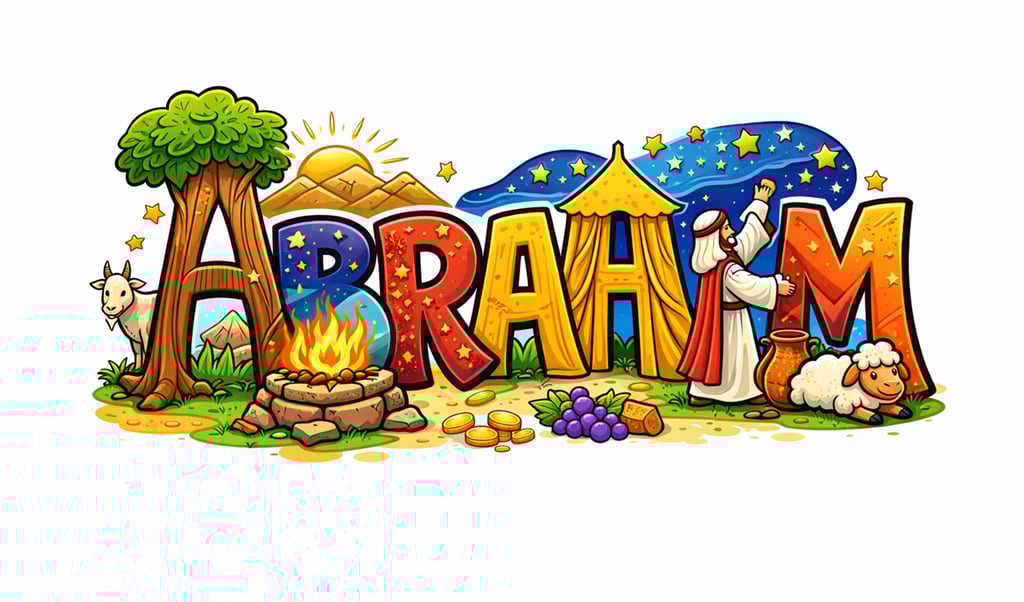
Grace, Trust, and God’s Promises
Vocabulary:
Defeated – to beat someone in a battle
Victorious – to win
dols – objects people worship instead of the one true God
Grace – kindness we don’t deserve
Almighty – having all power
Source – where something comes from
Bible Summary
Part 1: God’s Grace to Abram
Abram grew up in a country and family that worshiped idols (Joshua 24:2). These were false gods made by people. Even though Abram was surrounded by idol worship, God called him to leave his home and promised to bless him.
This shows that God can reach anyone, anywhere—even in the middle of false worship. He can reveal Himself to people no matter where they are or what they believe.
God showed Abram great kindness—this is called grace. God promised to make a whole nation from Abram, even though he didn’t have any children. God also said that people all over the world would be blessed through Abram. Anyone who tried to harm Abram would be defeated by God.
God didn’t need to do any of this. He is Almighty, meaning He has all power and needs nothing. Still, He chose to bless Abram out of kindness.
Abram, his wife, and his nephew Lot left for Canaan. Both men had a lot of animals and wealth, so much that the land couldn’t hold them together. Their workers started arguing, so Abram suggested they separate peacefully. Lot chose to live in the lush Jordan Valley near the sinful city of Sodom, while Abram stayed in Canaan.
After Lot left, God told Abram to look in every direction—north, south, east, and west. God promised to give all that land to Abram’s family forever and said his descendants would be too many to count. Abram then moved to Hebron and worshiped God by building an altar.
Later, a war broke out between two groups of kings. The kings of Sodom and Gomorrah lost the battle and ran away. The winning kings took everything from the cities, including Lot and all he owned.
When Abram heard his nephew Lot had been captured, he quickly gathered 318 trained men from his camp and a few allies. He chased after the enemy to rescue Lot. The army he fought was much bigger, but Abram was victorious. The Bible doesn’t say his men were strong fighters or had better weapons—God gave them the win. Melchizedek, a priest, confirmed this when he said, “The Lord delivered your enemies into your hand.” He also called God El Elyon, which means God Most High or God Almighty.
Part 2: Giving God the Credit
Abram knew his victory came from God. He didn’t want anyone to say a human king had helped him get rich. That’s why he refused the rewards offered by the king of Sodom. Abram said:
Genesis 14:22 – “With raised hand I have sworn an oath to the Lord, God Most High, Creator of heaven and earth, that I will accept nothing belonging to you… so that you will never be able to say, ‘I made Abram rich.’”
Abram’s words remind us that God is our source. He is the One who provides for us—not just to give us what we want, but because He is a loving Father who cares for His children.
Read and Reflect
Genesis 12–14: God and God Alone
1. What made God’s promise to Abram so surprising? (Hint: Think about Abram’s age and his family.)
2. Who made Abram win the battle with only a small group of men?
3. Why didn’t Abram want to take gifts from the king of Sodom?
Think It Through
Fill in the blank with the right word:
1. God gave Abram _______even though he didn’t earn it. (Hint: kindness)
2. Abram’s helpers were not great warriors, but God made them __________.
3. Melchizedek called God “El Elyon,” which means God __________.
4. Abram gave all the credit to __________ for his victory.
5. God promised to bless the world through Abram for Abram’s __________.
Genesis 15-16 (Abraham's Children)
God also promised to give Abram’s descendants the land of Canaan, which was home to the Amorites. But God said they wouldn’t take the land right away.
In a dream, God told Abram that his descendants would first be strangers in another land where they would be slaves for 400 years. After that, God would rescue them and bring them back to Canaan.
God said He wouldn’t punish the Amorites yet because they hadn’t done enough wrong to deserve it.
This showed that God is just—He punishes sin, but always at the right time.
Summary Continued
God promised Abram he would have a son, even though he and Sarai were very old. After waiting 10 years, Sarai became impatient and told Abram to marry her servant Hagar (Genesis 16:3). Sarai hoped she could have a child through her.
Note: Sarai was planning to adopt Hagar’s son so he would be her child, not a slave.
But things didn’t go well. Hagar began to despise Sarai, and Sarai got angry. She blamed Abram instead of taking responsibility.
What we can learn from Sarai’s mistake:
When we don’t trust God, things often go wrong.
What’s impossible for us is not impossible for God.
We must learn to wait for God’s perfect timing.
Sarai treated Hagar so badly that she ran away. God found her by a spring of water in the wilderness. He asked where she was going, and she answered that she was running away. God told her to return and submit to Sarai. He also said to name her son Ishmael.
Hagar gave God a new name: “The God who sees me.” Even though she was a servant, God cared for her deeply. This shows that God sees and values every person, no matter their status.
2. “God Sees Me” Mirror Craft
Theme: Hagar said, “You are the God who sees me.”
Activity:
Give each child a small handheld mirror (or a paper version shaped like one).
Around the mirror, have them write or draw things that remind them God sees them—emotions, situations, hopes, or struggles.
Discuss: Why does it matter that God sees us, even when others don’t?