Ariel Childs Books: Inspiring Children's Literature
Exodus 9 and 10
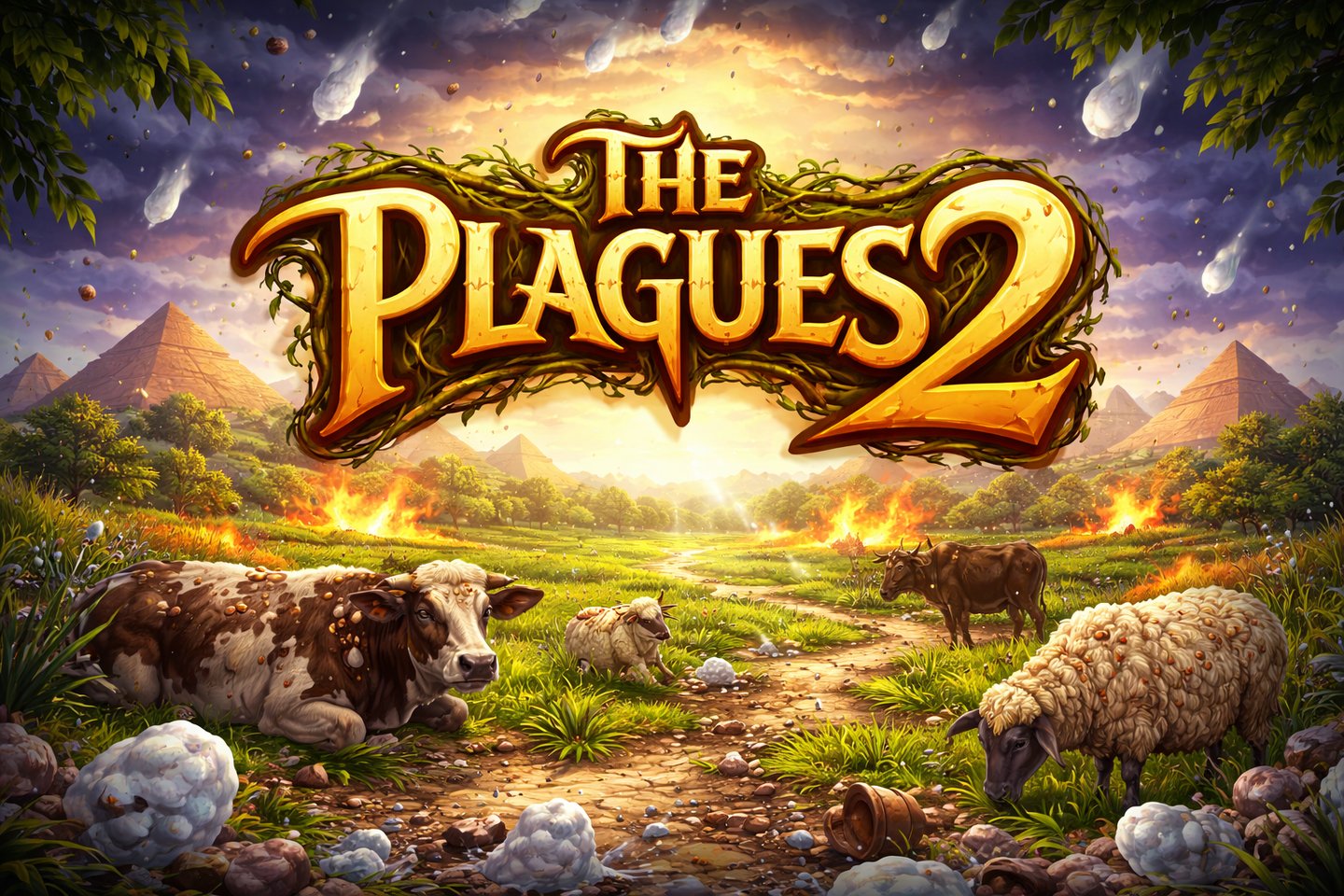
The Plagues of the Livestock, Boils, Hail, Locusts and Darkness
These lessons show that having a hard heart doesn’t just hurt you—it can hurt other people too. They also teach us that pride can make us blind to the truth.
Hard Choices / Soft Choices
The Plague of the Livestock
God once again showed His power by making a difference between the Egyptians and the Israelites. All the livestock of the Egyptians died, but all the livestock of the Israelites lived. That was unbelievable to Pharaoh, so he sent people to check for himself. When he found out it was true, he still chose to keep his heart hard and refused to obey God.
The Plague of the Boils
Next, God told Moses to toss soot into the air. When he did, painful boils broke out on all the Egyptians. Even Pharaoh’s magicians, who had been trying to copy God’s mighty acts, were so ashamed of their boils they didn’t want anyone to see them. Yet Pharaoh was unphased and kept his heart hard. He refused to let God’s people go.
Lesson Point:
God’s power is real, and no one can stand against Him. Pharaoh knew the truth, but he refused to change. We can learn from his example that when God shows us the truth, the best choice is to listen and obey.
1. Activity: Hard Choices / Soft Choices (10 minutes)
Materials:
Two signs: HARD HEART and SOFT HEART (taped to opposite walls or used as baskets)
Slips of paper with scenarios (or read them aloud)
Instructions:
Read a scenario.
Kids decide: is this a hard heart choice or a soft heart choice? They can walk to the sign, point, or place the slip in the correct basket.
Scenarios:
1. You get mad and use foul language toward someone.
2. You see a younger kid getting jumped, and instead of joining in, you pull them out.
3. Your grandma asks for help with the groceries, and you roll your eyes and ignore her.
4. A friend asks you to steal something from the corner store.
5. You apologize to a friend after saying something hurtful.
6. Somebody spreads a rumor about you, and instead of fighting, you talk it out.
7. You know God says “don’t lie,” but you lie anyway to stay out of trouble.
8. You stand up for someone who doesn’t have friends.
2. Discussion (5–7 minutes)
Ask:
“How does having a hard heart hurt us and the people around us?”
“What happens when you keep making hard-heart choices over and over?”
“What would it look like in your life if you had a soft heart toward God?”
3. Wrap-Up (2 minutes)
Say:
“Pharaoh’s hard heart brought pain on his whole nation. Our choices matter too—at home, in school, and in the neighborhood. A soft heart toward God doesn’t make us weak; it makes us strong enough to do what’s right.”
Pride and Blindness – Plague of Hail
Scripture: Exodus 9:19-20 (NIV)
“Those officials of Pharaoh who feared the word of the Lord hurried to bring their slaves and their livestock inside. But those who ignored the word of the Lord left their slaves and livestock in the field, and they died.”
Lesson Summary
In Exodus 9:19-20, God warned Pharaoh about a coming plague that would strike his livestock and servants. He gave Pharaoh and his officials a chance to save their animals by bringing them inside. Those who trusted God’s warning acted quickly and protected their animals, while those who ignored God’s word left their livestock in the fields and suffered loss.
God often gives us warnings so we can make the right choices. But pride can blind us—not our eyes, but our hearts—so we fail to see the truth and the consequences of our actions. Pharaoh’s pride made him blind to the suffering around him and to God’s power.
Lesson Objectives
Understand how pride can prevent people from seeing the truth.
Recognize that God gives warnings and choices to protect us.
Learn that obeying God protects us from harm.
Key Points
1. God Gives Warnings: God warns us to help us make wise choices.
2. Choices Have Consequences: Those who listened to God’s warning saved their animals; those who ignored it suffered.
3. Pride Can Blind Us: Pride makes us think we don’t need God or anyone else, and it stops us from seeing clearly with our hearts.
4. Obedience Brings Protection: Trusting God helps us avoid unnecessary pain.
Discussion Questions
Why do you think some people ignored God’s warning?
How does pride make people “blind” to what’s right or true?
How can we stay humble so we can see God’s warnings and guidance?
Activity: Blindfold Building Challenge
Purpose: To show how pride can blind us from seeing clearly and how humility helps us follow guidance.
Materials: Building blocks or LEGO sets, blindfolds.
Instructions:
1. Have kids try to build a simple structure (like a tower or small shape) without blindfolds first. Compare results.
2. Next, blindfold the kids and have them try to build the same structure without being able to see. Optionally, allow one peer to guide them verbally.
3. Compare the results with the first attempt.
Reflect:
Ask: How did it feel to build blindfolded? Was it harder?
Explain: Pride can make our hearts “blind,” just like the blindfold blocks our eyes. We might think we know better, but we miss what’s really there.
Relate to Pharaoh: His pride made him blind to God’s warnings and the suffering around him, which caused harm. Listening humbly to God’s guidance protects us, just like building with sight or with guidance helped the blocks stay in place.
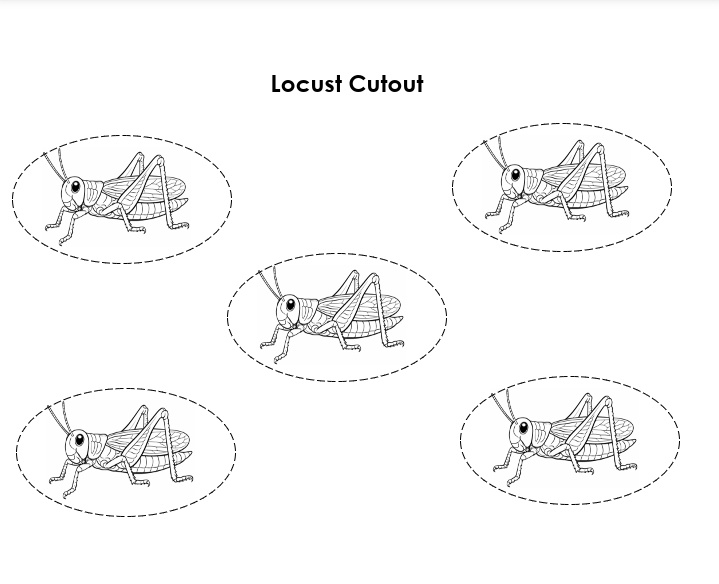
The Plagues of Locusts
God told Moses to go to Pharaoh again. He explained that Pharaoh’s heart was already hardened, but this was so everyone would see God’s power and future generations of Israelites would know He is the Lord.
Moses and Aaron went to Pharaoh and said, “How long will you refuse to humble yourself before God? Let my people go so they may serve Him.” If Pharaoh refused, God would send locusts to cover the land. Pharaoh’s own servants even told him to let the people go, but he would only allow the men. Moses said no—they would go with their wives, children, and livestock to make sacrifices to God. Pharaoh refused.
God then told Moses to stretch out his hand over Egypt. Instantly, locusts came and ate everything that had survived the hail. Pharaoh panicked and admitted he had sinned, asking Moses to pray to God to take the locusts away. God removed them and threw them into the Red Sea—but He also hardened Pharaoh’s heart again.
Next, God told Moses to stretch his hand toward the sky. A thick darkness covered Egypt for three days. People could not see each other, but the Israelites had light in their homes. Pharaoh finally said the Israelites could go—but he wanted them to leave their livestock behind. Moses insisted they could only leave if they could take their animals and offerings with them. Pharaoh’s heart stayed hard, and he even threatened Moses, saying he would die if he saw him again. Moses calmly replied that he would not see Pharaoh’s face again.
These plagues showed God’s power and faithfulness, but Pharaoh’s stubbornness kept him from obeying—even when the consequences were clear.
Activity: “Plague Posters”
Objective: Help kids remember the plagues of locusts and darkness and understand God’s power.
Materials:
Construction paper or cardstock
Crayons, markers, or colored pencils
Optional: cotton balls, black tissue paper
Instructions:
1. Divide the kids into small groups (2–4 per group).
2. Assign each group a plague: locusts or darkness.
3. Create a poster showing their plague:
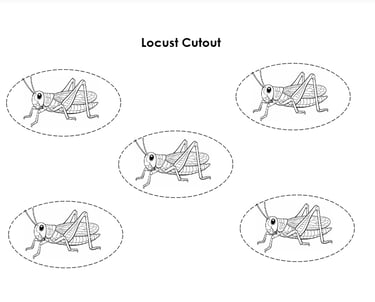
For locusts, draw or cut out locusts to cover fields or gardens.
For darkness, cover part of the poster with black tissue paper or dark crayon/marker, leaving one corner light to show the Israelites had light.
4. Add a caption that explains what happened and what it teaches about God’s power. Example: “God sent locusts to show Pharaoh He is the Lord!”
5. Share with the class. Let each group explain their poster and what lesson it teaches.
Discussion questions:
Why do you think God allowed Pharaoh to refuse at first?
How do the plagues show God’s power and care for His people?
How do you think the Israelites felt when they had light but the Egyptians didn’t?